Informing people about political deepfakes through text-based information and interactive games both improve people’s ability to spot AI-generated video and audio that falsely depict politicians, according to a study my colleagues and I conducted.
Although researchers have focused primarily on advancing technologies for detecting deepfakes, there is also a need for approaches that address the potential audiences for political deepfakes. Deepfakes are becoming increasingly difficult to identify, verify and combat as artificial intelligence technology improves.
Is it possible to inoculate the public to detect deepfakes, thereby increasing their awareness before exposure? My recent research with fellow media studies researchers Sang Jung Kim and Alex Scott at the Visual Media Lab at the University of Iowa has found that inoculation messages can help people recognize deepfakes and even make people more willing to debunk them.
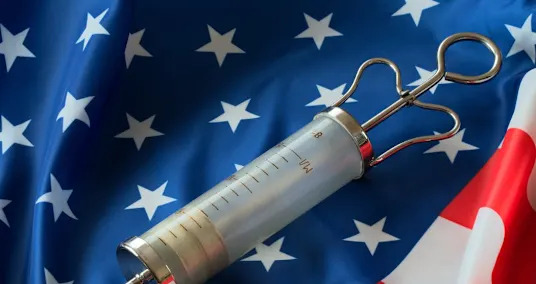
Inoculation theory proposes that psychological inoculation – analogous to getting a medical vaccination – can immunize people against persuasive attacks. The idea is that by explaining to people how deepfakes work, they become primed to recognize them when they encounter them.
In our experiment, we exposed one-third of participants to passive inoculation: traditional text-based warning messages about the threat and the characteristics of deepfakes. We exposed another third to active inoculation: an interactive game that challenged participants to identify deepfakes. The remaining third were given no inoculation.
Participants were then randomly shown either a deepfake video featuring Joe Biden making pro-abortion rights statements or a deepfake video featuring Donald Trump making anti-abortion rights statements. We found that both types of inoculation were effective in reducing the credibility participants gave to the deepfakes, while also increasing people’s awareness and intention to learn more about them.
Why it matters
Deepfakes are a serious threat to democracy because they use AI to create very realistic fake audio and video. These deepfakes can make politicians appear to say things they never actually said, which can damage public trust and cause people to believe false information. For example, some voters in New Hampshire received a phone call that sounded like Joe Biden, telling them not to vote in the state’s primary election.
Because AI technology is becoming more common, it is especially important to find ways to reduce the harmful effects of deepfakes. Recent research shows that labeling deepfakes with fact-checking statements is often not very effective, especially in political contexts. People tend to accept or reject fact-checks based on their existing political beliefs. In addition, false information often spreads faster than accurate information, making fact-checking too slow to fully stop the impact of false information.
As a result, researchers are increasingly calling for new ways to prepare people to resist misinformation in advance. Our research contributes to developing more effective strategies to help people resist AI-generated misinformation.
What other research is being done
Most research on inoculation against misinformation relies on passive media literacy approaches that mainly provide text-based messages. However, more recent studies show that active inoculation can be more effective. For example, online games that involve active participation have been shown to help people resist violent extremist messages.
In addition, most previous research has focused on protecting people from text-based misinformation. Our study instead examines inoculation against multimodal misinformation, such as deepfakes that combine video, audio and images. Although we expected active inoculation to work better for this type of misinformation, our findings show that both passive and active inoculation can help people cope with the threat of deepfakes.
What’s next
Our research shows that inoculation messages can help people recognize and resist deepfakes, but it is still unclear whether these effects last over time. In future studies, we plan to examine the long-term effect of inoculation messages.
We also aim to explore whether inoculation works in other areas beyond politics, including health. For example, how would people respond if a deepfake showed a fake doctor spreading health misinformation? Would earlier inoculation messages help people question and resist such content?
The Research Brief is a short take on interesting academic work.
This article is republished from The Conversation, a nonprofit, independent news organization bringing you facts and trustworthy analysis to help you make sense of our complex world. It was written by: Bingbing Zhang, University of Iowa
Read more:
Bingbing Zhang receives funding from the School of Journalism and Mass Communication at the University of Iowa.
NEUESTE BEITRÄGE
- 1
 Scientists sent a menstrual cup to space. This is how it went07.12.2025
 - 2Home Mechanization Frameworks for Brilliant Residing06.06.2024
- 3Roman around the Christmas tree | Space photo of the day for Dec. 25, 202525.12.2025
- 4Shrewd Home Gadgets to Save Energy06.06.2024
- 5Virtual reality opens doors for older people to build closer connections in real life24.12.2025
- 6Language Learning Applications for Voyagers06.06.2024
- 7Manual for Instructive Application for Youngsters01.01.1
- 8Scientists solve the mystery of 'impossible' merger of 'forbidden' black holes12.11.2025
- 9Eight Muslim nations condemn Israel's 'dangerous' new death penalty law02.04.2026
- 10Becoming the best at Discussion: Individual Procedures25.09.2023
- 114 Famous Gaming PCs of 2024: Execution, Versatility, and Advancement05.06.2024
- 12The most effective method to Guarantee Simple Availability in Seniors' SUVs19.10.2023
- 13Cuba says 33 have died of mosquito-borne illnesses as epidemic rages01.12.2025
- 14The Iconic, Instantly Recognizable Plastic Chair That's Known All Around The World05.04.2026
- 15Governors Ball 2026: Lorde, A$AP Rocky and Stray Kids set to headline06.01.2026







Ähnliche Artikel
- Artemis 2 captures historic 'Earthset' photo | Space photo of the day for April 7, 202607.04.2026
- Tesla Germany Registrations Quadruple to 9,252 Vehicles in Best March Ever07.04.2026
- What's going on with Katseye? The Manon Bannerman hiatus drama, explained.07.04.2026
- Two IDF officers, civilian face indictment in alleged Gaza aid-truck smuggling scheme07.04.2026
- West Palm Beach Shorecrest, renderings of downtown waterfront condo07.04.2026
- Artemis II astronauts make long-distance call to the space station as they head home from the moon07.04.2026
- Tuesday, April 7. Russia’s War On Ukraine: News And Information From Ukraine07.04.2026
- The Eastern Bongo, Kenya’s Rare Forest Antelope on the Brink07.04.2026
- U.K. blocks Kanye West from entering Britain to headline now canceled festival: What led to the ban07.04.2026
- Russia confirms 16 Cameroonian soldiers killed in Ukraine war07.04.2026
- First Phosphate advances battery-grade phosphate project as analysts highlight strategic Federal support07.04.2026
- After fleeing past Hezbollah fighting, some Israelis on northern border vow to stay07.04.2026
- 'Unreal' solar eclipse: Artemis 2 crew just saw one of the rarest sights in spaceflight history07.04.2026
- Chinese construction workers in Israel: 'I’d rather be bombed than live in poverty'07.04.2026
- Broken toilet, T-shirts on windows and collecting saliva: The weirdness of daily life aboard Orion07.04.2026
- Czech Republic caps fuel prices amid Iran war energy crisis07.04.2026
- NASA releases stunning new images captured by the Artemis II moon mission, including 'Earthset' and a solar eclipse from space07.04.2026
- Amid Iran war, 53 of Israel's future scientists showcase projects in Jerusalem contest07.04.2026
- Iranian-linked drone attack kills Kurdish couple in northern Iraq07.04.2026
- Thousands of small fish defy gravity to climb Congo waterfall07.04.2026